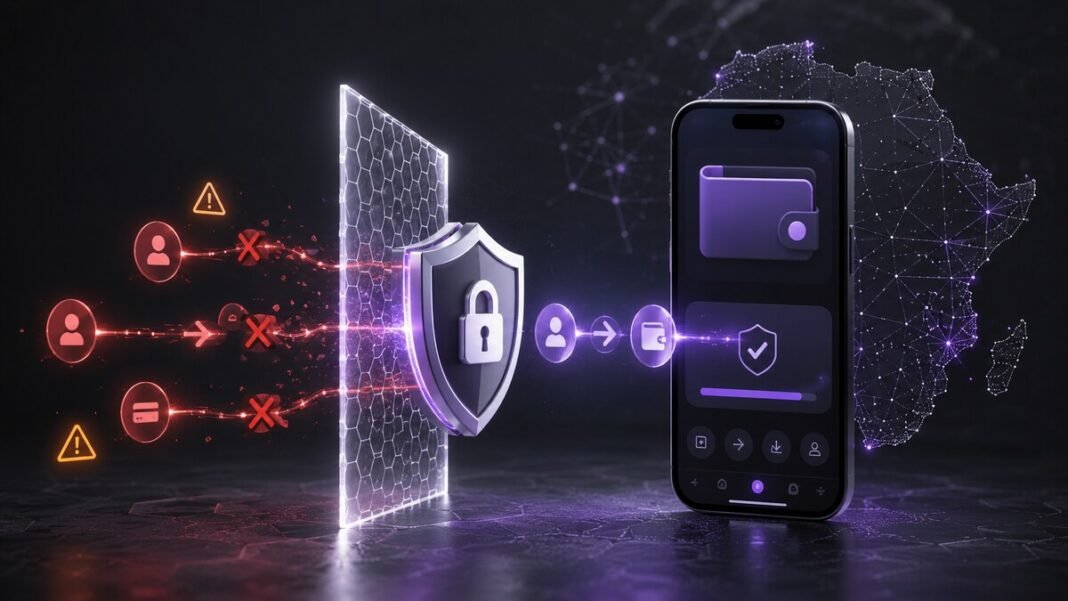

Mobile Money Scams in Africa exploit one of the continent’s most useful financial innovations. Fraudsters often do not need to break the mobile-money platform itself. They target the user through impersonation, fake support, stolen PINs, misleading payment messages and social engineering.
INTERPOL’s 2026 African Cyberthreat Assessment reports mobile-money fraud as the most prevalent scam among the African countries responding to its assessment. That makes personal verification habits a frontline security control.
How mobile money scams in Africa usually work
A fraud attempt commonly starts with a believable story. The attacker claims to be an agent, provider employee, merchant, buyer, relative or customer. The goal is to make you disclose a secret, approve a prompt, send money or trust a fake transaction confirmation.
The technology can be sophisticated, but the decision point is often simple: will the victim act before independently checking?
7 ways to protect yourself from mobile money scams
1. Never share your PIN
Your PIN is an authorization secret. A support agent does not need it to investigate a legitimate issue. Do not type it into forms reached through unsolicited links.
2. Protect one-time codes and approval prompts
Read every authentication prompt carefully. If you did not initiate the action, reject it. Do not relay an OTP to a caller or chat contact.
3. Verify transactions inside the official service
A screenshot or SMS can be forged. Check your balance and transaction history inside the official app, USSD flow or trusted provider channel before releasing goods or returning supposed overpayments.
4. Be skeptical of “wrong transfer” stories
If someone says they accidentally sent you money, verify independently. Do not immediately send a new payment to a different number. Use the provider’s official dispute or reversal process where available.
5. Use an official agent or support channel
Do not assume a social-media account or incoming call belongs to your provider. Locate support through the official app, website or documented service number.
6. Lock your SIM and device
A screen lock, SIM PIN and strong device authentication reduce the damage if your phone is stolen. Keep recovery options current and understand how your mobile operator handles SIM replacement.
7. Slow down unusual requests
Fraudsters manufacture urgency. Give yourself permission to stop a transaction, verify the recipient and call a trusted person before sending money.
Common mobile-money scam scenarios
Fake reversal: The scammer claims a mistaken transfer and pressures you to refund funds that never arrived or to send money outside the formal reversal process.
Fake customer support: Someone claims your wallet has a problem and asks for credentials, an OTP or a remote-access action.
Merchant fraud: A seller or buyer presents a fake payment confirmation and attempts to complete the exchange before the real balance is checked.
Impersonation: A compromised or cloned social account asks for an emergency transfer while pretending to be someone you know.
Prize or promotion scam: You are told you won something but must pay a “processing” or “release” fee.
What if your phone or SIM is stolen?
Use another trusted device to contact the mobile operator and wallet provider as quickly as possible. Secure the email account and other services that use your phone number for recovery. Review banking and wallet activity. Change credentials that may have been exposed and preserve records of unauthorized transactions.
Where available, enable remote device lock or erase only after considering whether you need information from the device for reporting. Your provider and local authorities can advise on incident-specific steps.
What to do after suspected mobile-money fraud
- Stop further communication with the suspicious contact.
- Contact the official mobile-money provider immediately.
- Contact your bank if a linked bank account or card is involved.
- Secure your email, wallet and other high-value accounts.
- Save transaction IDs, numbers, timestamps and screenshots.
- Report the account through the platform and appropriate local channel.
Do not send further money to anyone promising guaranteed recovery. Victims can be targeted a second time by recovery scams.
Mobile security is part of broader cyber hygiene
The strongest defense is layered. Unique passwords, MFA, device updates, secure backups and verification habits work together. Review our online account security checklist and online scam red flags.
For the regional threat landscape and business controls, start with our Cybersecurity in Africa 2026 guide.
Verify before you send money
Fraud succeeds when urgency replaces verification. Before approving a mobile-money request, stop and confirm the recipient, amount and reason through a trusted channel you initiate yourself. Never rely only on a caller ID, profile photo or message thread because those signals can be spoofed or compromised. If someone claims to be a relative, employer, bank, mobile operator or support agent, use the organization’s official app, website or known phone number to check the request independently.
Frequently asked questions
Can someone steal mobile money with only my phone number?
A phone number alone normally should not authorize a transaction, but it can help a scammer target you. Protect your PIN, OTPs, SIM, device and recovery channels.
Should I return a mistaken mobile-money transfer myself?
Verify the transaction first and use the provider’s official resolution process where possible. Do not send a fresh transfer to a different number simply because a caller pressures you.
Can mobile-money payment screenshots be fake?
Yes. Always verify the transaction in your own official account rather than trusting an image supplied by the other party.
What should I do if I shared my PIN?
Change it through the official service immediately, contact the provider, review transactions and secure any linked accounts.
Next step: review your mobile-money PIN, SIM security and account-recovery options today, then teach the same verification routine to one family member who uses mobile payments.
TechBrief Africa reports independently and follows a documented editorial standards policy. Spotted an error in this article? Tell us and we will review it.