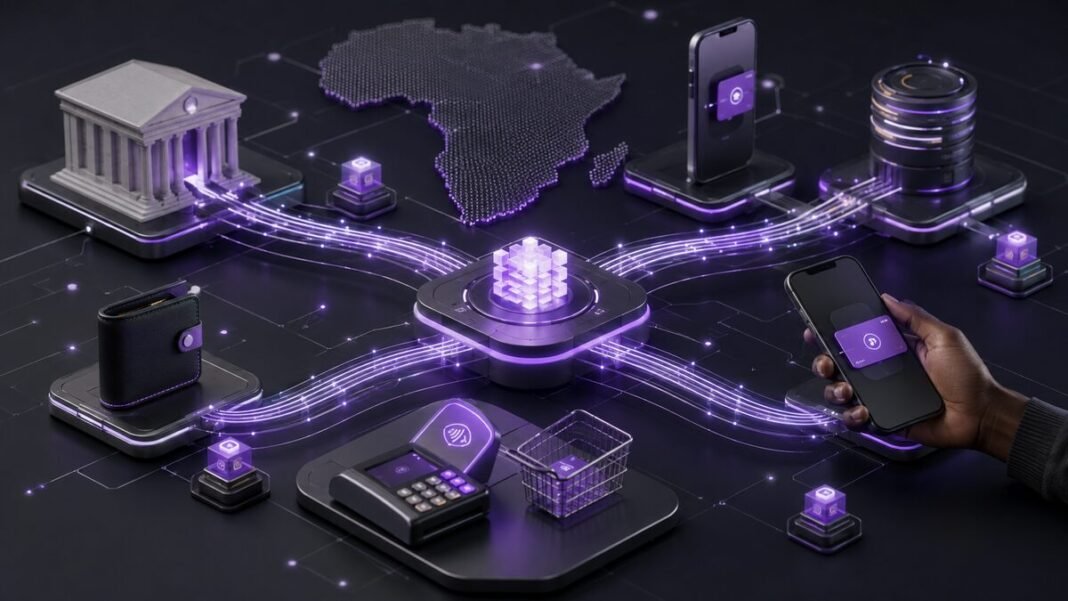

Digital Payments in Africa are moving into a new phase. Consumers and businesses increasingly navigate bank transfers, mobile money, wallets, cards, instant-payment systems and QR payments. The opportunity is a larger digital economy, but the challenge is making these methods work together reliably, affordably and safely.
The best payment technology becomes almost invisible to the user. Money arrives quickly, fees are clear, the recipient is easy to verify, and failed transactions are resolved without a long support journey.
Digital Payments in Africa: what matters in 2026
Adoption differs widely between African markets because financial infrastructure, regulation and customer behaviour vary. The common direction is toward faster account-to-account movement, broader merchant acceptance and tighter links between banks and non-bank providers.
The World Bank Global Findex documents digital financial use, while the IMF’s Digital Payment Innovations in Sub-Saharan Africa examines mobile money, fast payments, CBDCs and crypto assets.
1. Instant payments are moving to the centre
Fast systems can enable near-real-time account transfers around the clock. The World Bank’s 2026 white paper examines how inclusive instant payments can scale.
2. Interoperability is becoming necessary
A network becomes more useful as more people and merchants can reach one another. Closed systems force customers to juggle multiple accounts, while interoperability reduces that friction.
3. Merchant adoption is a battleground
Consumers cannot live digitally if everyday merchants require cash. Providers need affordable acceptance and reliable settlement. The GSMA mobile-money report shows wallets becoming commerce tools.
4. Cross-border payments remain difficult
Domestic transfers can be fast while international payments stay costly. Multiple currencies, compliance regimes and settlement arrangements make cross-border improvement strategically valuable.
5. Security is becoming user experience
Authentication, alerts, recipient confirmation and dispute handling shape trust. The risks are covered in Cybersecurity in Africa and Online Scams in Africa.
6. Payment data must work harder
Businesses want payments to connect with accounting, commerce and reconciliation tools. That creates opportunities for providers solving operational pain after checkout.
7. Regulation balances innovation and stability
Payments are critical financial infrastructure. Regulators must support competition while safeguarding funds, reducing crime and maintaining operational resilience.
What this means in practice
Small businesses should compare payment providers on total cost per successful transaction, settlement speed, failed-payment rates, refund processes, reconciliation workload and support quality. A low headline fee can be expensive if failures create hours of manual work.
- Confirm customers can actually use the payment method.
- Calculate the full cost per completed transaction.
- Check when settled funds become usable.
- Test the experience during a failed or reversed payment.
- Review fraud controls and recipient verification.
- Connect transaction data to business records where possible.
- Pilot before routing all revenue through one provider.
Risks and trade-offs to understand
Payment growth does not eliminate cash overnight. Merchant hardware, connectivity, device affordability and customer habits still shape adoption. Providers also face fraud, outages, compliance costs and the challenge of operating across fragmented markets.
The safest systems combine back-end monitoring with understandable customer controls. Consumers can strengthen protection using the steps in Online Account Security.
A simple decision framework
- Define the customer payment journey from initiation to settlement.
- Measure total friction, not only transaction speed.
- Check interoperability with banks, wallets and merchant tools.
- Verify regulatory status and safeguarding arrangements.
- Review support and reversal performance.
- Scale when reliability and economics remain strong under real volume.
Frequently asked questions
What are digital payments?
They transfer monetary value electronically rather than through physical cash, including bank transfers, mobile money, cards, wallets and QR payments.
Why are they growing in Africa?
Mobile adoption, expanding account access, digital commerce and improving payment infrastructure all support growth.
What is an instant payment system?
It enables near-real-time account-to-account transfers, generally with continuous availability and rapid confirmation.
What is the biggest challenge?
Interoperability, fraud, affordability, reliability, merchant acceptance and cross-border friction remain important, with priorities varying by country.
Bottom line
The future of African payments is not one winning app. It is an increasingly connected network of rails, banks, wallets and merchants. Systems that make payment simple while handling complexity underneath can create lasting value.
Next step: explore Mobile Money in Africa to understand one of the continent’s most influential payment models.
What happens when a digital payment fails?
Failed payments are where a system’s real quality becomes visible. A customer may see money debited while a merchant sees no confirmation, a transfer can time out, or a reversal can take longer than expected. Each case creates uncertainty, and uncertainty damages trust faster when the transaction involves rent, payroll, school fees or business inventory.
A strong payment provider designs the failure journey as carefully as the successful checkout. Users should receive a clear status, a transaction reference and realistic resolution timing. Merchants need to know whether they can safely fulfil an order. Support teams need access to the same transaction state shown to customers instead of forcing users to repeat information.
Four payment-quality metrics businesses should track
- Authorization or success rate: the share of legitimate attempts that complete.
- Settlement time: how quickly completed payments become usable funds.
- Reversal time: how quickly failed or disputed payments are corrected.
- Support resolution time: how long payment problems remain unresolved.
These operational measures often matter more to customer loyalty than adding another payment button. A provider that handles exceptions well can become more valuable as transaction volume grows.