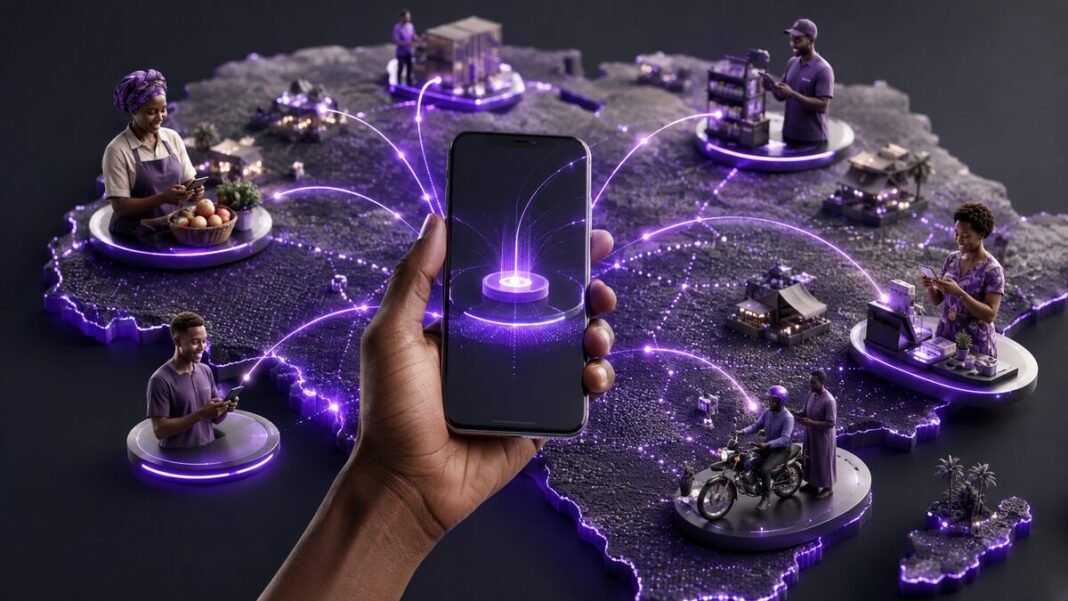

Mobile Money in Africa has evolved from a convenient transfer service into everyday financial infrastructure in many markets. Wallets and agent networks connect consumers, merchants, employers and service providers, while the next stage increasingly includes commerce, savings, credit and cross-border services.
The strategic question in 2026 is how mobile-money ecosystems deepen useful activity while improving interoperability, security, agent economics and consumer protection. Growth in registered accounts matters less if customers do not trust or regularly use the service.
Mobile Money in Africa: what matters in 2026
Sub-Saharan Africa remains central to the global mobile-money story. Distribution is the core advantage: phones and local agents can reach people who may live far from a bank branch or transact in amounts that are costly for branch-based models.
The GSMA reported that mobile money globally reached 2.3 billion registered accounts in 2025 and processed more than $2 trillion in transactions.
1. Merchant payments are becoming central
The ecosystem is moving beyond person-to-person transfers. Merchant acceptance makes a wallet useful throughout the week and can reduce cash handling for small businesses.
2. Wallets are becoming financial platforms
Services increasingly connect mobile money with bills, savings, insurance and credit. Users need clear pricing and a clear explanation of which regulated institution provides each product.
3. Interoperability is becoming infrastructure
Better connections among wallets, banks and instant-payment systems can reduce closed-network friction. This trend links directly to Digital Payments in Africa.
4. Agents remain strategically important
Digital finance is not purely digital. Agents solve cash-in and cash-out needs and provide a human trust layer. Providers need sufficient liquidity, reliable systems and transparent commissions.
5. Cross-border use is expanding
Trade, migration and remittances create demand for easier international transfers. Foreign exchange, compliance and settlement add complexity, so transparent pricing is essential.
6. Small businesses gain better records
Transaction histories can support bookkeeping and reconciliation. Where responsibly used, those records may also help with credit assessment without turning every merchant into an automatic lending target.
7. Fraud prevention is becoming a feature
SIM-swap attacks, impersonation and social engineering undermine trust. Strong authentication and support matter alongside speed. See Mobile Money Scams in Africa.
8. Regulation is focusing on outcomes
As mobile money becomes important infrastructure, regulators focus on safeguarding funds, identity, competition, data protection and complaint handling. Compliance should be designed into the service.
9. Inclusion is moving from access to use
A registered wallet does not automatically improve financial wellbeing. The stronger test is affordable and reliable use. See Financial Inclusion in Africa.
What this means in practice
Consumers should judge mobile money by reliability, total fees and dispute support, not popularity alone. Businesses should compare merchant acceptance, settlement time and reconciliation tools. Founders may find more defensible opportunities in infrastructure behind the wallet than in another undifferentiated consumer product.
- Use a strong PIN not shared with other accounts.
- Never disclose one-time codes to callers or chat contacts.
- Verify unexpected payment requests through another channel.
- Check recipient details before confirming transfers.
- Review alerts quickly and report suspicious activity.
- Use official support channels rather than numbers supplied by strangers.
Risks and trade-offs to understand
A mobile-money ecosystem can grow quickly while still suffering from fraud, agent liquidity shortages, service outages or confusing fees. Cross-border expansion adds regulatory and foreign-exchange complexity. Credit products can also create harm if pricing and affordability are weak.
These risks make online account security part of financial literacy. Providers should design for safe recovery and clear transaction confirmation rather than putting the entire security burden on customers.
A simple decision framework
- Check whether the service is regulated in your market.
- Compare transfer, withdrawal and merchant-payment costs.
- Evaluate agent availability and cash liquidity where relevant.
- Test failed-payment and reversal processes.
- Review account security and recovery controls.
- Use the service for larger flows only after reliability is proven.
Frequently asked questions
What is mobile money?
It is a mobile-linked financial account used to store, send and receive value, often supported by agents for cash deposits and withdrawals.
Why is mobile money popular in Africa?
It can provide convenient financial access without relying on dense bank-branch networks, while phones and agents provide broad distribution.
Is mobile money the same as mobile banking?
No. Mobile banking usually provides digital access to a bank account, while mobile money can operate through a separate regulated wallet ecosystem.
Is mobile money safe?
It can be safe with strong provider controls and good user practices, but scams, impersonation and account takeover remain real risks.
Bottom line
Mobile money’s next chapter is about becoming dependable everyday financial infrastructure. Merchant payments, interoperability and responsible financial products can deepen value, but trust and consumer protection will determine whether that growth lasts.
Next step: read FinTech in Africa to see how mobile money fits into the wider financial-technology ecosystem.
Why the agent and merchant ecosystem still matters
Mobile money succeeds through an ecosystem, not through software alone. Agents need enough liquidity to handle withdrawals and deposits. Merchants need predictable settlement and fees that make digital acceptance worthwhile. Customers need confidence that a transaction problem can be resolved. Providers must therefore manage incentives across several participants at once.
This creates a useful strategic test: if a product grows transaction volume, does it also strengthen the people and businesses that make the network usable? Aggressive pricing that weakens agent economics can damage availability. Merchant promotions that disappear without creating repeat behaviour can produce temporary volume rather than durable adoption.
Providers should monitor active customers, transaction frequency, merchant retention, agent liquidity, failed transactions, support resolution time and fraud losses together. Those metrics reveal whether growth reflects a healthier network or simply more registered accounts.
How mobile money fits into wider payment infrastructure
Mobile money does not operate in isolation. It increasingly connects with bank accounts, fast-payment systems and cross-border services. The IMF review of digital payment innovations in Sub-Saharan Africa places mobile money alongside fast payment systems, CBDCs and crypto assets in the wider policy landscape. For providers, that reinforces a practical point: long-term value will depend partly on how well mobile-money ecosystems connect to the rest of the financial system while protecting customers and maintaining resilience.