
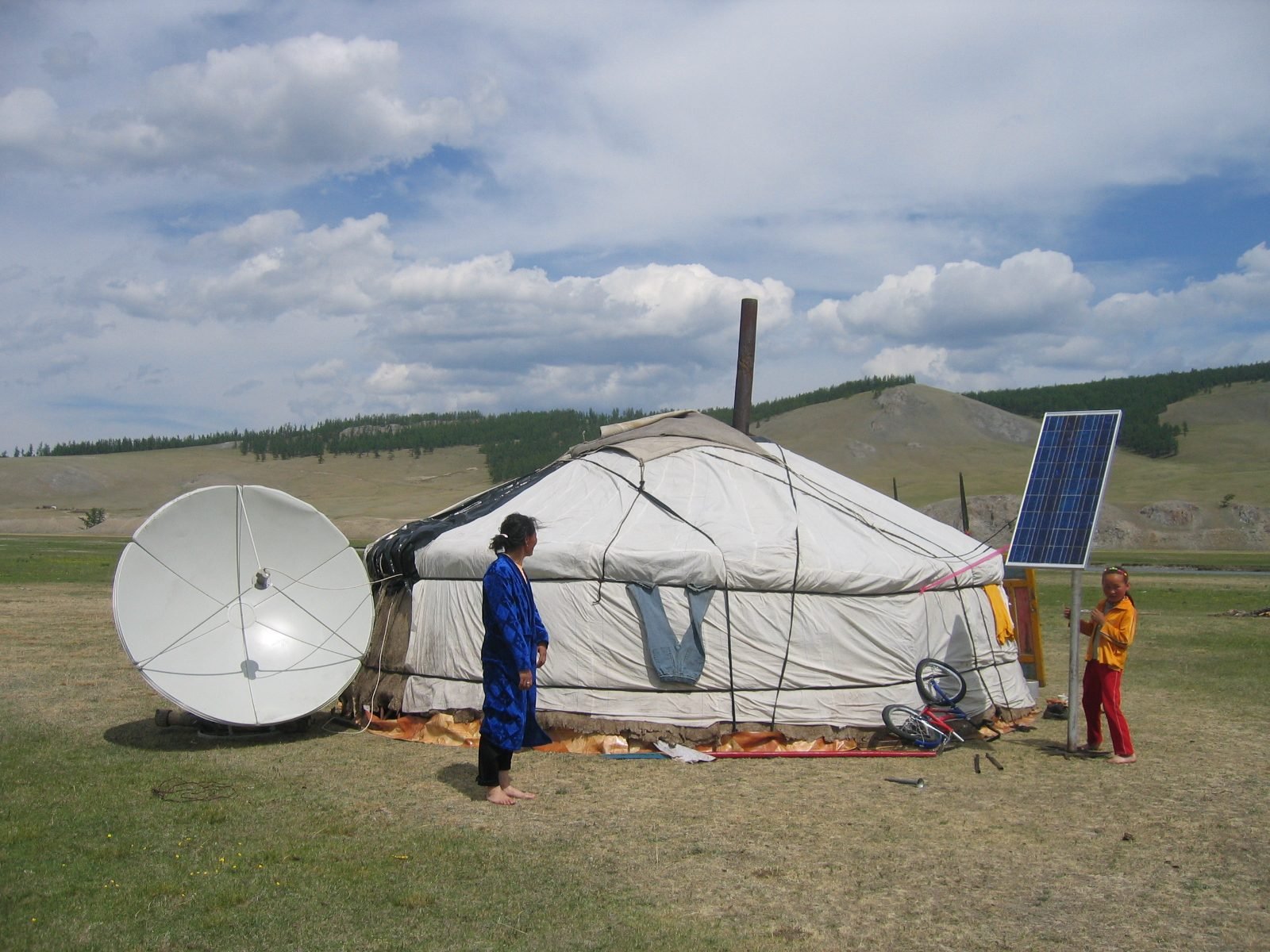
Satellite internet can connect homes, schools, clinics and businesses far from fibre and mobile networks. A new generation of low-earth-orbit (LEO) satellite services has made satellite broadband much faster than older systems, and it is now licensed in a growing number of African countries.
How satellite internet works
A dish or terminal at your location sends and receives data from satellites, which relay it to ground stations connected to the internet. There are two main types:
| Geostationary (GEO) | Low earth orbit (LEO) | |
|---|---|---|
| Altitude | About 36,000 km | Typically a few hundred to around 1,200 km |
| Latency (delay) | High; noticeable on video calls and gaming | Low; similar to many land-based connections |
| Satellites needed | A few cover large regions | Large constellations, often thousands |
| Typical use | TV, VSAT for businesses, maritime | Home and business broadband |
Well-known LEO services include Starlink, with others such as Amazon’s Project Kuiper and OneWeb (Eutelsat) at various stages of deployment.
Availability in Africa
Satellite internet providers must be licensed by each country’s communications regulator. LEO services are now available in a growing list of African countries, while others are still considering licences. Check the provider’s availability map and your regulator’s website to confirm a service is legal where you are. Using unlicensed equipment can lead to confiscation or fines.
Costs to expect
- Hardware: a one-off cost for the dish and router, which can be significant relative to local incomes
- Monthly subscription: varies by country and plan; often priced higher than urban fibre but competitive with alternatives in remote areas
- Power: terminals need steady electricity; plan for backup power. See Power Banks, Inverters and Solar
- Currency and taxes: prices may change with exchange rates and import duties
Who satellite internet suits
- Rural homes and farms without fibre or reliable 4G
- Schools and clinics in remote areas
- Mining, construction and NGO field sites
- Businesses needing a backup link if fibre or undersea cables fail; see Undersea Cables and Africa
If you have good fibre or 4G and 5G coverage, these are usually cheaper per gigabyte. Compare with 5G home internet where available.
Things to check before buying
- Is the service licensed in your country?
- Does the dish have a clear view of the sky, without trees or buildings blocking it?
- What are the fair-use limits and speed during busy hours?
- How is customer support and hardware replacement handled locally?
- How does heavy rain affect performance in your area?
Read how satellite fits alongside cables and mobile networks in Internet Connectivity in Africa.